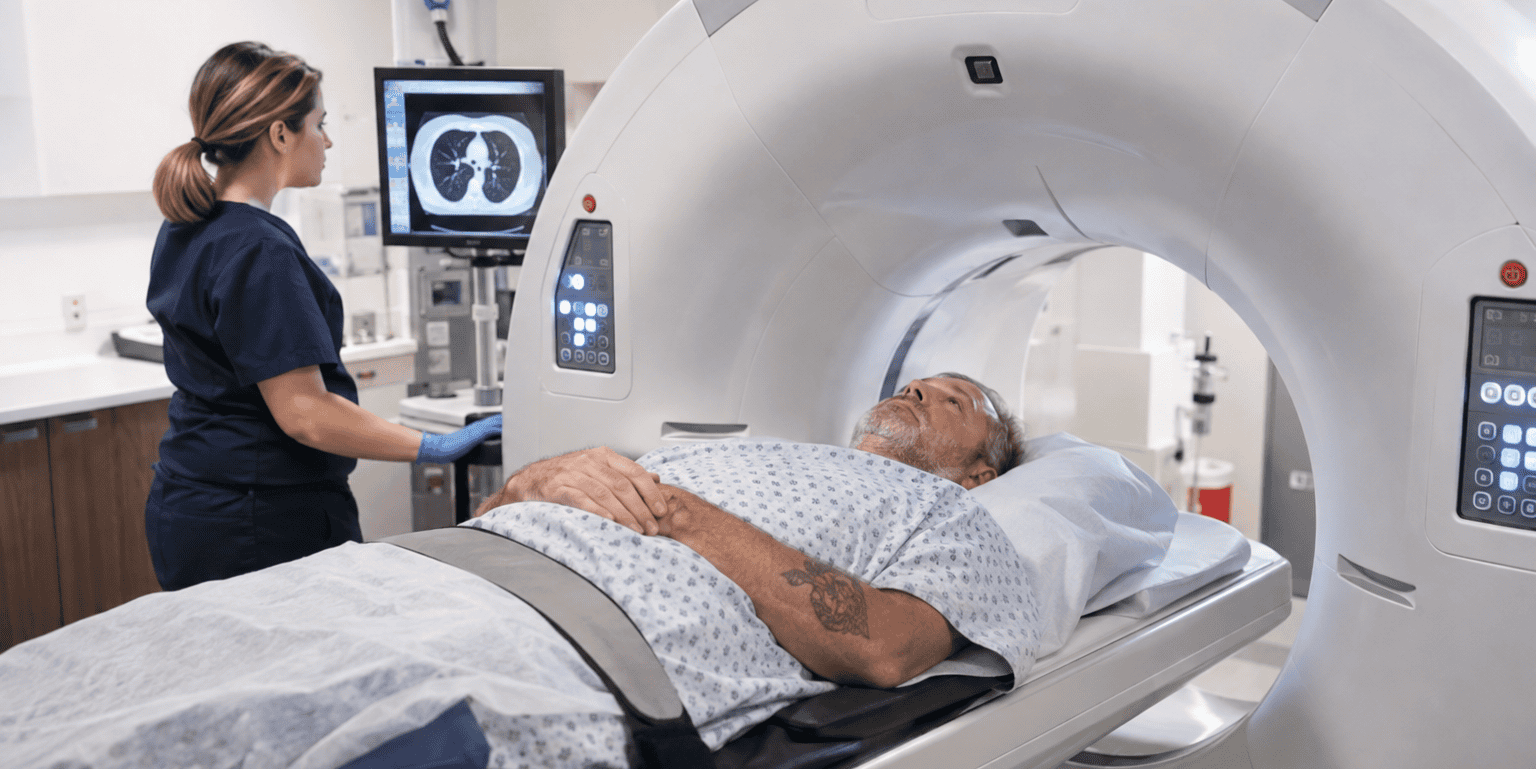
CCTA Reveals Silent Plaque in NFL Players

Coronary CT angiography with dedicated plaque analysis software found that former NFL players have high levels of silent plaque in their arteries but no symptoms of heart disease. That’s according to research to be presented at this week’s AHA 2026, underscoring the value of CCTA in detecting early signs of coronary artery disease. 

Recent research has shown that CCTA can be used for working up patients with symptoms of heart disease. 

  • But more tantalizing is the modality’s potential to predict who is at risk of coronary events due to issues like plaque buildup in their coronary arteries – before symptoms ever occur. 

This has spurred the growth of AI solutions for analyzing CCTA scans to not only detect and quantify the presence of plaque, but also to analyze plaque components to determine if it’s at risk of rupture. 

  • One such solution is Heartflow Plaque Analysis, which converts CCTA scans into color-coded 3D models of a patient’s coronary anatomy, calculating metrics like total plaque volume and plaque composition.

In the new research, Heartflow Plaque Analysis was used on CCTA scans acquired from 200 retired NFL players enrolled in GAMEFILM, a longitudinal study tracking heart health in former professional athletes. The scans revealed…

  • Coronary plaque was present in 85% of former NFL players, but only 13% had a known CAD diagnosis prior to scans.
  • 42% had a blockage in at least one of their arteries of 50% or greater, indicating advanced CAD.
  • 29% had plaque substantial enough to restrict cardiac blood flow, but less than 10% reported symptoms.
  • Almost 90% of the plaque detected was noncalcified, which can have higher disease risk and isn’t detected by coronary artery calcium scores.
  • One-third had coronary plaque, putting them in the “severe” or “extensive” category of total plaque volume as calculated by the software. 

On the positive side, seeing their plaque results motivated the former players to take action, with almost 90% of those who weren’t already on cholesterol-lowering medications saying they were ready to start treatment. 

The Takeaway

Most imaging facilities aren’t going to have former NFL players walk through their doors very often. But the new study highlights the very real risk of coronary plaque for everyone, regardless of whether they ever played professional sports. It’s also a big boost for Heartflow, which is highlighting several important studies at this week’s AHA 2026 (see also The Wire section of this newsletter).

Unpacking Heartflow IPO’s Lessons for AI Firms

Cardiac AI specialist Heartflow went public last week, and the IPO was a watershed moment for the imaging AI segment. The question is whether Heartflow is blazing a path to be followed by other AI developers or if the company is a shooting star that’s more likely to be admired from afar than emulated.

First the details: Heartflow went public August 8, raising $317M by issuing 16.7M shares at $19 each – and finishing up 50% for the day. 

  • The IPO beat analyst expectations, which originally estimated gross proceeds of $215M, and put the company’s market capitalization at $2.5B – well within the mid-cap stock category. 

So what’s so special about this IPO? Heartflow’s flagship product is FFRCT Analysis, which uses AI-based software to calculate fractional flow reserve – a measure of heart health – from coronary CT angiography scans. 

  • This eliminates the need for an invasive pressure-wire catheter to be threaded into the heart.

Heartflow got an early start in the FFR-CT segment by nabbing FDA clearance for Heartflow FFRCT Analysis in 2014, and since then has been the single most successful AI company in winning reimbursement from both CMS and private payors.

  • In fact, a 2023 analysis of AI reimbursement found that FFRCT Analysis was the top AI product by number of submitted CPT claims, at 67.3k claims – over 4X more than the next product on the list.

That’s created a revenue stream for Heartflow that clearly bucks the myth that clinicians aren’t getting paid for AI.

  • And in an IPO filing with the SEC, Heartflow revealed how reimbursement is driving revenue growth, which was up 44% in 2024 over 2023 ($125.8M vs. $87.2M, respectively). 

But it’s not all sunshine and rainbows at the Mountain View, California company, which posted significant net losses for both 2024 and 2023 ($96.4M and $95.7M).

  • As a public company, Heartflow may have a shorter leash in getting to profitability had it remained privately held.

But the bigger picture is what Heartflow’s IPO means for the imaging AI segment as a whole. 

  • It’s easily the biggest IPO by a pure-play imaging IT vendor in years, and dispels the conventional wisdom that investors are shying away from the sector.

The Takeaway

Heartflow’s IPO shows that in spite of clinical AI’s shortcomings (slow adoption, sluggish reimbursement, etc.), it’s still generating significant investor interest. The company’s focus on achieving both clinical and financial milestones (i.e. reimbursement) should be an example for other AI developers.

Get every issue of The Imaging Wire, delivered right to your inbox.