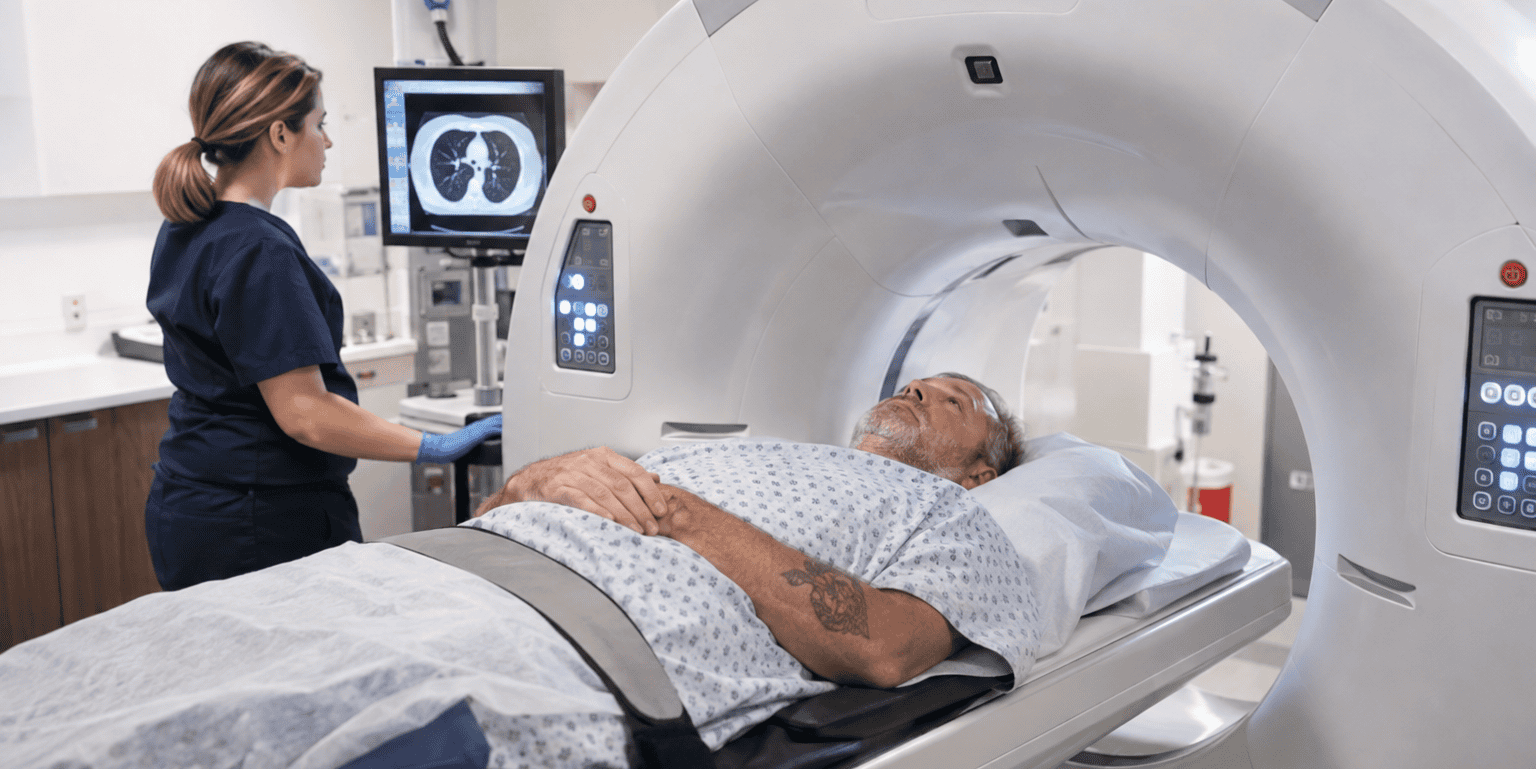
CCTA Reveals Silent Plaque in NFL Players

Coronary CT angiography with dedicated plaque analysis software found that former NFL players have high levels of silent plaque in their arteries but no symptoms of heart disease. That’s according to research to be presented at this week’s AHA 2026, underscoring the value of CCTA in detecting early signs of coronary artery disease. 

Recent research has shown that CCTA can be used for working up patients with symptoms of heart disease. 

  • But more tantalizing is the modality’s potential to predict who is at risk of coronary events due to issues like plaque buildup in their coronary arteries – before symptoms ever occur. 

This has spurred the growth of AI solutions for analyzing CCTA scans to not only detect and quantify the presence of plaque, but also to analyze plaque components to determine if it’s at risk of rupture. 

  • One such solution is Heartflow Plaque Analysis, which converts CCTA scans into color-coded 3D models of a patient’s coronary anatomy, calculating metrics like total plaque volume and plaque composition.

In the new research, Heartflow Plaque Analysis was used on CCTA scans acquired from 200 retired NFL players enrolled in GAMEFILM, a longitudinal study tracking heart health in former professional athletes. The scans revealed…

  • Coronary plaque was present in 85% of former NFL players, but only 13% had a known CAD diagnosis prior to scans.
  • 42% had a blockage in at least one of their arteries of 50% or greater, indicating advanced CAD.
  • 29% had plaque substantial enough to restrict cardiac blood flow, but less than 10% reported symptoms.
  • Almost 90% of the plaque detected was noncalcified, which can have higher disease risk and isn’t detected by coronary artery calcium scores.
  • One-third had coronary plaque, putting them in the “severe” or “extensive” category of total plaque volume as calculated by the software. 

On the positive side, seeing their plaque results motivated the former players to take action, with almost 90% of those who weren’t already on cholesterol-lowering medications saying they were ready to start treatment. 

The Takeaway

Most imaging facilities aren’t going to have former NFL players walk through their doors very often. But the new study highlights the very real risk of coronary plaque for everyone, regardless of whether they ever played professional sports. It’s also a big boost for Heartflow, which is highlighting several important studies at this week’s AHA 2026 (see also The Wire section of this newsletter).

CAC Research Leads Imaging at AHA 2025

The 2025 American Heart Association annual conference wraps up today, and cardiac imaging has been a major focus in New Orleans. In particular, research has highlighted imaging’s power to predict future cardiac events – and guide treatment to prevent them. 

Coronary artery calcium scoring with CT is a great example, as CAC scores can predict not only cardiovascular but also all-cause mortality. 

  • Another common theme at AHA 2025 has been opportunistic screening, in which data from imaging exams acquired for other clinical indications can be used to detect osteoporosis, cardiovascular disease, and other issues. 

Check out the items below for some of the hottest imaging topics at AHA 2025, and for a deeper dive into non-imaging news from New Orleans, be sure to visit our Cardiac Wire sister site. 

News from the show’s first three days include…

  • A massive study of 40k people found that those with CT-derived CAC scores greater than 0 were 2X-3X more likely to die from any cause than people without any CAC – and more died of causes other than cardiovascular disease. Also, 8.5% of patients had other significant findings. 
  • Community health personnel on a Native American reservation were trained to perform point-of-care screening echocardiography assisted by Us2.ai’s AI algorithms. 
  • Us2.ai’s algorithm was also used with transthoracic echo in the SCAN-MP study to detect transthyretin amyloid cardiomyopathy, a cause of heart failure. 
  • Treadmill stress tests fell short compared to CCTA in screening older master’s athletes for ischemia that could lead to sudden cardiac death.
  • A program in Brazil that used echocardiography to screen schoolchildren for latent rheumatic heart disease led to lower prevalence rates after 10 years (2.5% vs. 4.5%). 
  • Patients with hypertrophic cardiomyopathy who had higher levels of myocardial fibrosis on cardiac MRI were almost 6X more likely to have adverse events over eight years.
  • HeartLung Technologies’ AI tool predicted CAC presence on CT scans in 2.1k participants in the MESA study with higher AUC than other tools (AUC = 0.73 vs. 0.68).
  • Another study used HeartLung’s AI to analyze CAC scans to detect myosteatosis – a sign of systemic metabolic dysfunction – which predicted atrial fibrillation and heart failure. 
  • A program promoting CAC scoring to an urban population brought in people for screening who might have been missed through physician referral. 

The Takeaway

This week’s news from AHA 2025 shows medical imaging’s contribution to early detection of cardiovascular disease – the leading cause of death worldwide. CT-based CAC scoring has especially promising potential, not only for heart disease but also other conditions through opportunistic screening.

Get every issue of The Imaging Wire, delivered right to your inbox.