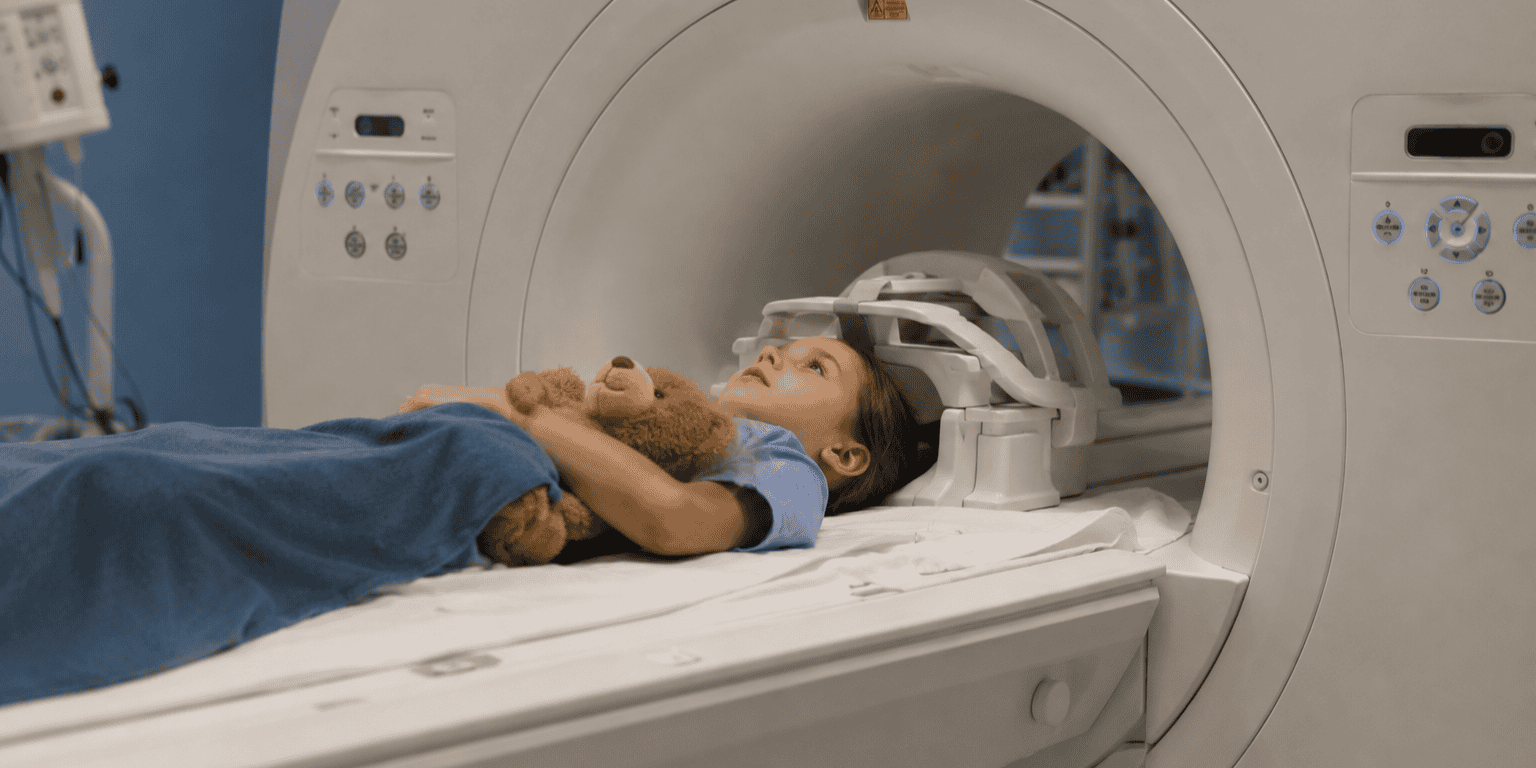
Pediatric MRI Safety Surveyed

This past year has seen a renewed focus on MRI safety after a fatal accident in New York in 2025. Most of the attention has been on adult MRI, but what about kids? A new analysis in JACR finds that pediatric MRI accidents are fortunately rare, but occur often enough that continued vigilance is warranted. 

Pediatric MRI poses particular safety challenges to imaging facilities. Caregivers are often in the scanning room to comfort children, and sedation is frequently required to keep kids still during exams. 

  • But pediatric MRI safety hasn’t been studied as extensively as it has in adults, so researchers from five U.S. children’s hospitals reviewed MRI safety events that occurred at their facilities from 2017 to 2022.

Researchers focused on reported events that occurred within Zone IV, the area under the ACR’s four-zone safety model that includes the scanner room. They found…

  • A total of 146 safety events occurred in Zone IV out of 541k pediatric exams, for an event rate of 0.027%. 
  • An average of 4.9 events per year occurred at each site, or 3.3 events per 100k exams.
  • Event types involved projectiles (30%), burn/thermal injuries (13%), and implants (10%).
  • 78 events (53%) directly involved patients.
  • Ten events (6.8%) were classified as serious.

Frequent causes of events included medical equipment and supplies (anesthesia equipment and monitors, stethoscopes, and needles) and personal items like phones and badges.

  • Implanted devices like cochlear implants represent a growing challenge, as 20%-30% of children getting MRI scans have them, and safety events occurred despite sites following manufacturers’ guidelines. 

Why did the safety events happen? Study authors found that MRI safety protocols weren’t followed in 60% of events.

  • Lack of protocol adherence is a common refrain in MRI accidents that have involved adults, illustrating that all the guidelines and rules in the world won’t help if they aren’t followed to the letter.

The Takeaway

The new study on pediatric MRI safety highlights the fact that children shouldn’t just be treated like little adults when it comes to safe scanning procedures. The research offers a benchmark against which pediatric imaging facilities can measure themselves, while also offering additional guidance on mistakes to avoid when scanning kids.

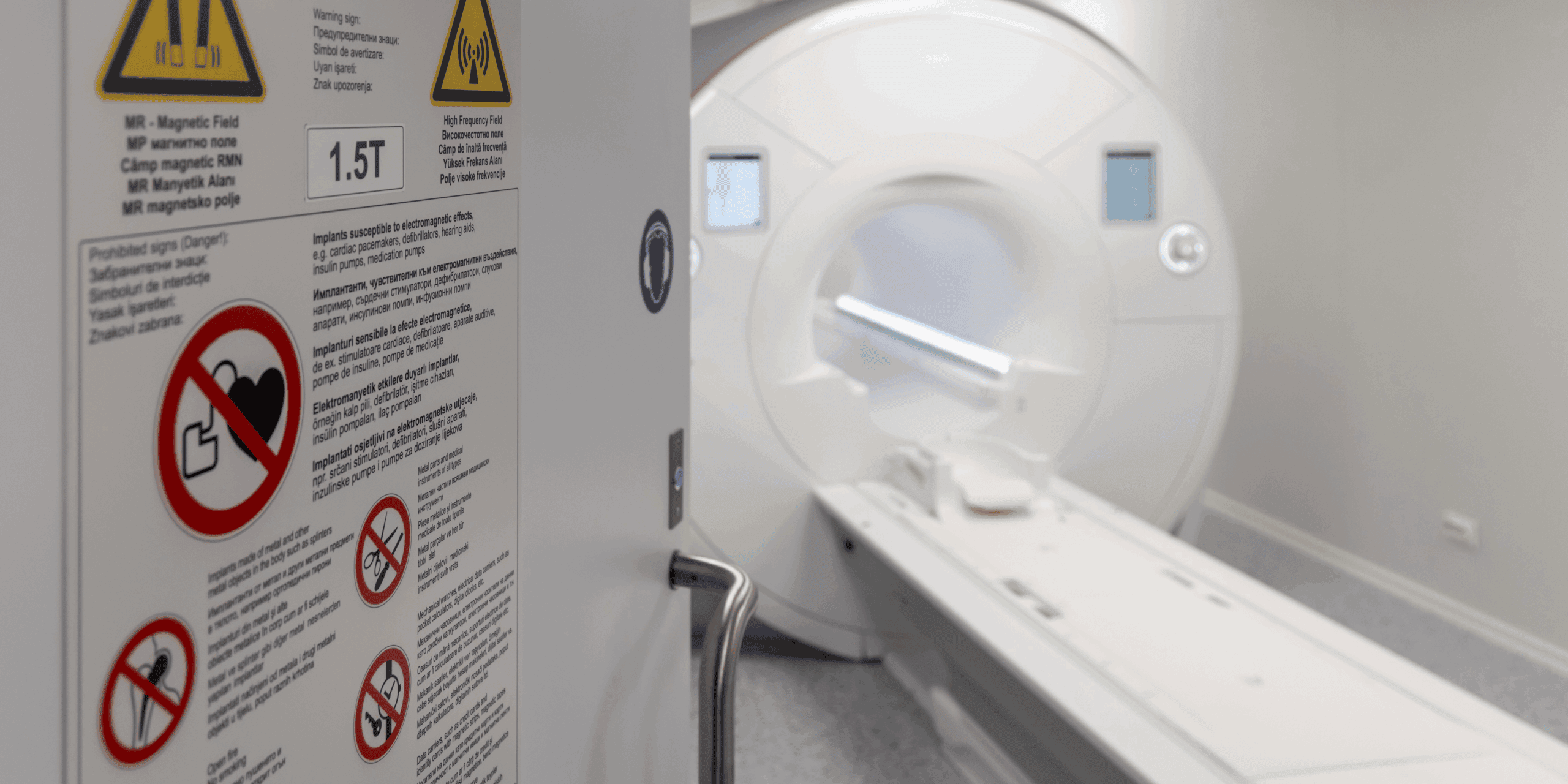
MRI of Bullet Fragments Is Possible

Radiology has a renewed focus on MRI safety following the tragic death of a New York man in an MRI accident last month. With that in mind, a new JACR study looks at adverse MRI events caused by an uncommon but still important phenomenon: retained bullet fragments in patients getting scans. 

MRI is radiology’s most powerful modality, but its strong magnetic fields can be hazardous – and on extremely rare occasions even fatal – for both patients and medical personnel.

  • Patients are supposed to be screened for metallic implants, jewelry, and other contraindications, but how often do providers know to ask about retained bullet fragments?

Having a retained bullet fragment on its own isn’t a contraindication for MRI, but providers do need to know where fragments are located and how large they are.

  • If pre-scan screening discovers a patient with a retained fragment, they typically receive X-rays of the involved area to determine location and size – scans should be aborted if the fragment is in a solid organ or within 5 mm of an important artery or vein.

If all these steps are taken and the scan goes ahead, how often do adverse MRI events occur? 

  • Researchers reviewed 6.1k X-ray reports that contained the terms “bullet” or “shrapnel” over 13 years, finding 284 patients who got an MRI scan after a retained fragment was found on radiography.

They found…

  • Only four patients (1.8%) experienced symptoms during MRI scans.
  • Each of the exams was terminated early due to patient discomfort, with three patients reporting burning and one general discomfort.
  • None of the symptomatic exams had the bullet in the MRI field of view.
  • No serious injury and no follow-up care was required. 

The Takeaway

The new findings are encouraging by showing that with careful patient screening and monitoring, MRI scans can be performed on patients with retained bullet fragments. But as always, MRI operators must remain vigilant and adhere to published MRI safety guidelines.

MRI Accident Turns Deadly

A tragic MRI accident in Long Island, New York, has turned deadly. A man who was pulled into a mobile MRI scanner by a heavy chain he was wearing died of his injuries. 

Keith McAllister was waiting outside a mobile MRI trailer operated by Nassau Open MRI on Long Island as his wife received a knee scan.

  • McAllister was wearing a weight-training chain around his neck that weighed some 20 pounds.

When he entered the trailer to help his wife get off the scanner table, the system’s powerful 1.5T magnetic field drew him against the magnet. It took staff an hour to free him.

Investigators are still looking into the details of the episode, but it underscores the shortcomings in how MRI safety is regulated in the U.S., where fatal MRI accidents are extremely rare but still do occur.  

  • That’s according to MRI safety expert Tobias Gilk, vice president at architectural firm Radiology Planning and founder of Gilk Radiology Consultants, who spoke to The Imaging Wire about the accident.

The U.S. has some of the most comprehensive and sophisticated guidelines on MRI safety, encapsulated in the ACR Manual on MR Safety.

  • What’s more, the radiology community including ACR, ISMRM, ASRT, and others are currently observing their annual MR Safety Week to promote safe MRI scanning – an event that started just a few days after McAllister died.

But despite the great leaps in knowledge about MRI safety, Gilk believes that keeping patients safe is complicated by the exponential growth in the modality’s complexity, while actual enforcement of safety standards is lacking. 

  • Many state health departments don’t even address MRI safety as they focus more aggressively on regulating ionizing imaging modalities like CT and X-ray, and healthcare certification bodies like the Joint Commission lack enforcement teeth.

Instead, MRI safety often becomes the responsibility of technologists who frequently must juggle multiple tasks as they manage both patients and scanner operations.

  • This can be particularly challenging in mobile MRI coaches, often staffed by a single MRI technologist where the only barrier between the outside world and the scanning environment is just a single – often unlocked – door. 

The Takeaway

The tragic death of Keith McAllister in a mobile MRI trailer shows that all the guidelines and safety events in the world won’t keep patients safe unless accompanied by stronger enforcement of the knowledge the radiology community already has. We can do better.

Get every issue of The Imaging Wire, delivered right to your inbox.