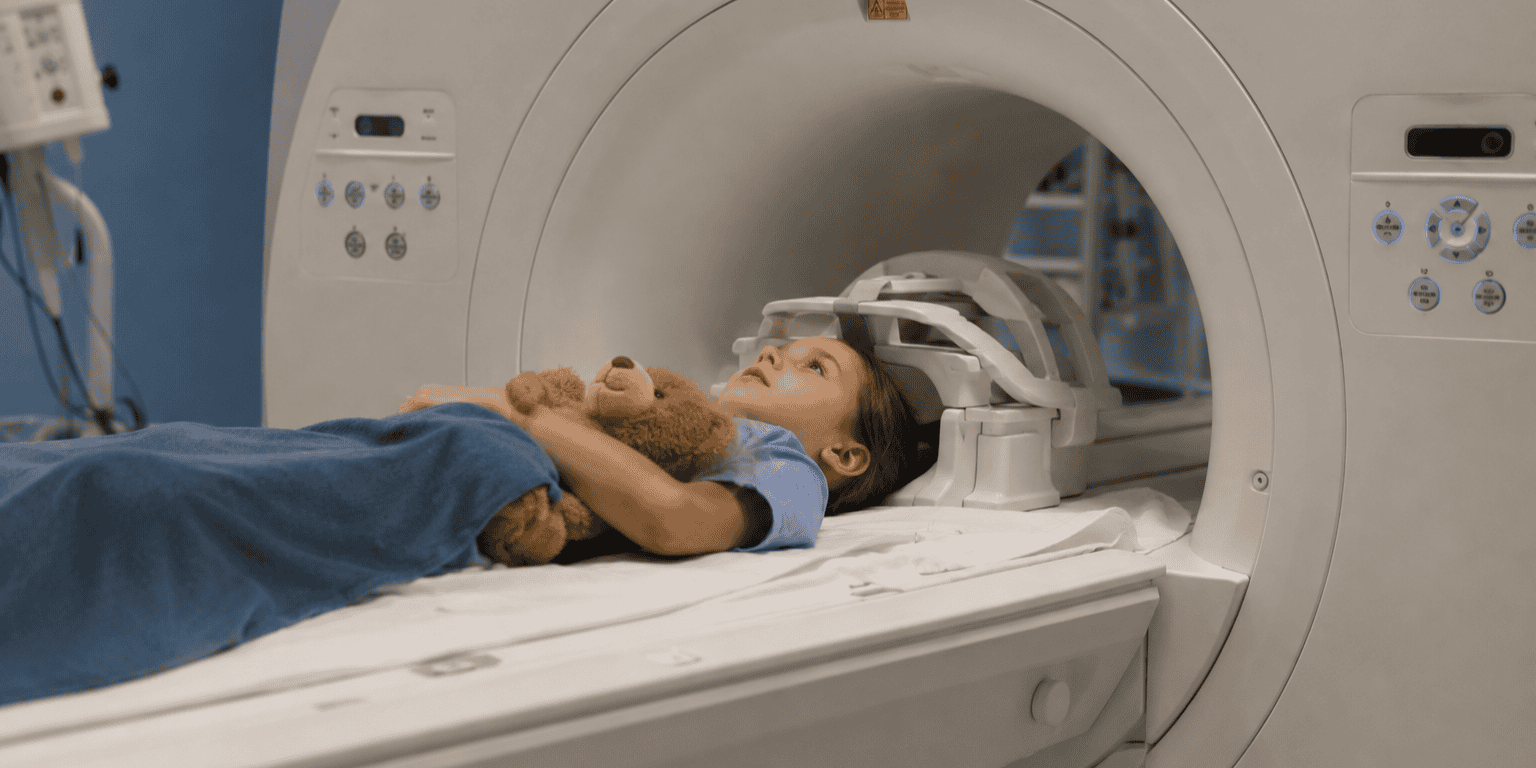
Pediatric MRI Safety Surveyed

This past year has seen a renewed focus on MRI safety after a fatal accident in New York in 2025. Most of the attention has been on adult MRI, but what about kids? A new analysis in JACR finds that pediatric MRI accidents are fortunately rare, but occur often enough that continued vigilance is warranted. 

Pediatric MRI poses particular safety challenges to imaging facilities. Caregivers are often in the scanning room to comfort children, and sedation is frequently required to keep kids still during exams. 

  • But pediatric MRI safety hasn’t been studied as extensively as it has in adults, so researchers from five U.S. children’s hospitals reviewed MRI safety events that occurred at their facilities from 2017 to 2022.

Researchers focused on reported events that occurred within Zone IV, the area under the ACR’s four-zone safety model that includes the scanner room. They found…

  • A total of 146 safety events occurred in Zone IV out of 541k pediatric exams, for an event rate of 0.027%. 
  • An average of 4.9 events per year occurred at each site, or 3.3 events per 100k exams.
  • Event types involved projectiles (30%), burn/thermal injuries (13%), and implants (10%).
  • 78 events (53%) directly involved patients.
  • Ten events (6.8%) were classified as serious.

Frequent causes of events included medical equipment and supplies (anesthesia equipment and monitors, stethoscopes, and needles) and personal items like phones and badges.

  • Implanted devices like cochlear implants represent a growing challenge, as 20%-30% of children getting MRI scans have them, and safety events occurred despite sites following manufacturers’ guidelines. 

Why did the safety events happen? Study authors found that MRI safety protocols weren’t followed in 60% of events.

  • Lack of protocol adherence is a common refrain in MRI accidents that have involved adults, illustrating that all the guidelines and rules in the world won’t help if they aren’t followed to the letter.

The Takeaway

The new study on pediatric MRI safety highlights the fact that children shouldn’t just be treated like little adults when it comes to safe scanning procedures. The research offers a benchmark against which pediatric imaging facilities can measure themselves, while also offering additional guidance on mistakes to avoid when scanning kids.

Low-Dose CT Confounds CAD in Kids

When it comes to pediatric CT scans, clinicians should make every effort to reduce dose as much as possible. But a new study in AJR indicates that lower CT radiation dose can affect the performance of software tools like computer-aided detection. 

Initiatives like the Image Wisely and Image Gently projects have succeeded in raising awareness of radiation dose and have helped radiologists find ways to reduce it.

But every little bit counts in pediatric dose reduction, especially given that one CT exam can raise the risk of developing cancer by 0.35%. 

  • Imaging tools like AI and CAD could help, but there have been few studies examining the performance of pulmonary CAD software developed for adults in analyzing scans of children.

To address that gap, researchers including radiologists from Cincinnati Children’s Hospital Medical Center investigated the performance of two open-source CAD algorithms trained on adults for detecting lung nodules in 73 patients with a mean age of 14.7 years. 

  • The algorithms included FlyerScan, a CAD developed by the authors, and MONAI, an open-source project for deep learning in medical imaging. 

Scans were acquired at standard-dose (mean effective dose=1.77 mSv) and low-dose (mean effective dose=0.32 mSv) levels, with the results showing that both algorithms turned in lower performance at lower radiation dose for nodules 3-30 mm … 

  • FlyerScan saw its sensitivity decline (77% vs. 67%) and detected fewer 3mm lung nodules (33 vs. 24).
  • MONAI also saw lower sensitivity (68% vs. 62%) and detected fewer 3mm lung nodules (16 vs. 13).
  • Reduced sensitivity was more pronounced for nodules less than 5 mm.

The findings should be taken with a grain of salt, as the open-source algorithms were not originally trained on pediatric data.

  • But the results do underscore the challenge in developing image analysis software optimized for pediatric applications.

The Takeaway

With respect to low radiation dose and high AI accuracy in CT scans of kids, radiologists may not be able to have their cake and eat it too – yet. More work will be needed before AI solutions developed for adults can be used in children.

Get every issue of The Imaging Wire, delivered right to your inbox.