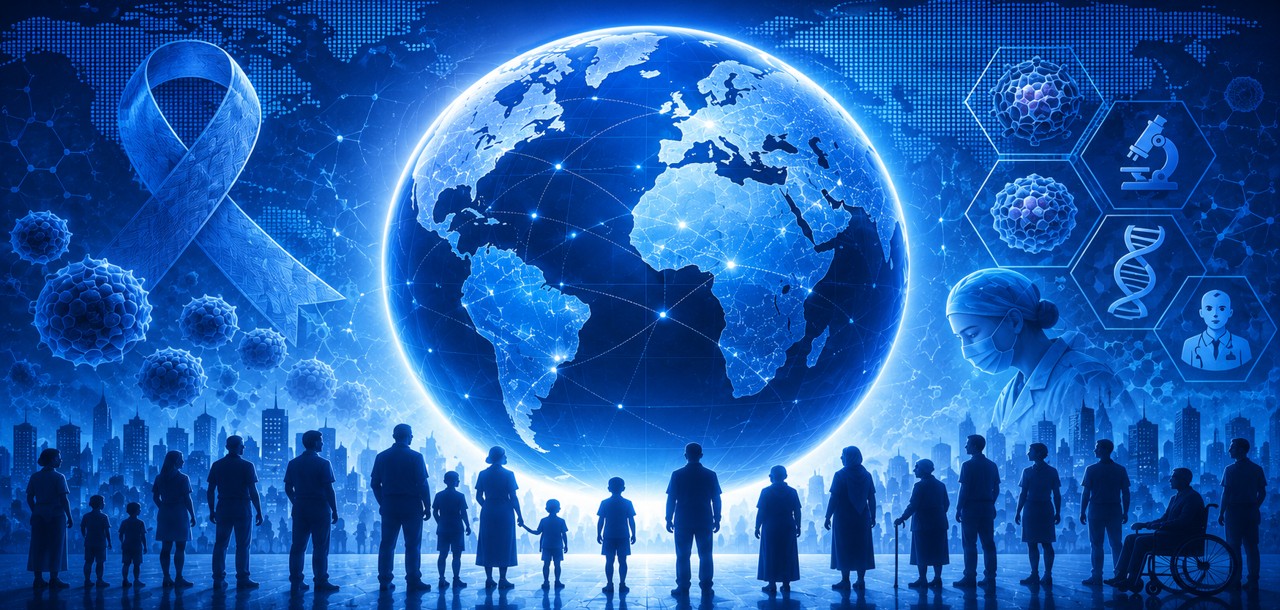
Gaps in Global Cancer Burden Widen

About 20.6M people worldwide were diagnosed with cancer in 2024, a nearly 7% increase from 2020, WHO estimates. The number is sobering, and while the organization’s Global Status Report on Cancer 2026 revealed progress is being made, it isn’t being made equally.

The global cancer burden remains high.

  • Cancer led to nearly 17% of all global deaths in 2021 and was estimated to be the leading cause of premature deaths in 41 countries. 
  • As of 2024, breast cancer made up 25% of diagnoses in women. Lung cancer led male diagnoses, making up 16% of cancer incidence. 
  • Much of the burden is falling on younger populations: Nearly half of the 9.7M cancer-related deaths in 2024 were among people aged 30 to 69. 

WHO’s initial 2020 report set priorities to improve care — now it’s time for a temperature check. Some things have gotten better:

  • Global tobacco use decreased by 27% from 2010 to 2025.
  • HPV vaccination programs in 85% of countries have reduced infection-related cancers by 22%.

But it’s not all good news. Insufficient progress has been made in…

  • Radiotherapy access, with no radiation facilities at all in 23 low- and middle-income countries (LMICs).
  • Diagnostics, with 47% of populations lacking access to basic diagnostic services.

Breast cancer statistics bear out these disparities.

  • 28% of LMICs have an early diagnosis rate >60% versus 91% of high-income countries (HICs).
  • Early diagnosis = better survival odds. Many HICs had 5-year survival rates 4x higher than some sub-Saharan African countries, where the average 5-year survival rate was 39%.

The findings may sound familiar. Several U.S. studies have linked socioeconomic disparities to decreased screening rates – WHO’s report shows this distressing trend on a global scale. 

Still, WHO offers recommendations to mitigate the unequal burden of cancer. They outline seven specific shifts in capabilities, protections, and priorities that can be made by governments, clinicians, and civilians alike. They include: 

  • Embedding cancer control in universal health coverage.
  • Strengthening health system capacity.
  • Enhancing social protections.
  • Including individuals with lived experience of cancer in decision-making.
  • Promoting transparent data.
  • Aligning research with the needs of LMICs.
  • Unifying the global cancer agenda. 

The Takeaway

While WHO’s 2026 report on global cancer shows the world has made headway in battling the cancer burden, huge disparities in access to screening and treatment make it hard to celebrate just yet. Low- and middle-income countries continue to face decreased treatment access and survival rates, especially in breast cancer.

Nuclear Medicine’s AI Uptake

Nuclear medicine is one of the more venerable medical imaging technologies. Artificial intelligence is one of the newest. How are the two getting on? That question is explored in new point-counterpoint articles in AJR

Nuclear medicine was an early adopter of computerized image processing, for tasks like image analysis, quantification, and segmentation, giving rise to a cottage industry of niche software developers.

  • But this early momentum hasn’t carried over into the AI age: on the FDA’s list of 694 cleared AI medical applications through July 2023, 76% of the listed devices are classified as radiology, while just four address nuclear medicine and PET.

In the AJR articles, the position that AI in nuclear medicine is more hype than reality is taken by Eliot Siegel, MD, and Michael Morris, MD, who note that software has already been developed for most of the image analysis tasks that nuclear medicine physicians need. 

  • At the same time, Siegel and Morris say the development of AI-type algorithms like convolutional neural networks and transformers has been “relatively slow” in nuclear medicine. 

Why the slow uptake? One big reason is the lack of publicly available nuclear medicine databases for algorithm training. 

  • Also, nuclear medicine’s emphasis on function rather than anatomical changes means fewer tasks requiring detection of subtle changes.

On the other side of the coin, Babak Saboury, MD, and Munir Ghesani, MD, take a more optimistic view of AI in nuclear medicine, particularly thanks to the booming growth in theranostics. 

  • New commercial AI applications to guide the therapeutic use of radiopharmaceuticals are being developed, and some have received FDA clearance. 

As for the data shortage, groups like SNMMI are collaborating with agencies and institutions to create registries – such as for theranostics – to help train algorithms. 

  • They note that advances are already underway for AI-enhanced applications such as improving image quality, decreasing radiation dose, reducing imaging time, quantifying disease, and aiding radiation therapy planning. 

The Takeaway
The AJR articles offer a fascinating perspective on an area of medical imaging that’s often overlooked. While nuclear medicine may never have the broad impact of anatomical-based modalities like MRI and CT, growth in exciting areas like theranostics suggest that it will attract AI developers to create solutions for delivering better patient care.

Get every issue of The Imaging Wire, delivered right to your inbox.