|
Azra AI’s Blackford Plans, 7T PET/MRI, and Bad Food Affects Your Brain
October 19, 2026
|
|
|

|
|
Together with
|

|
|
|
“I predict that in less than 5 years CT will be mostly ‘solved’ – where most CT scans get AI-generated draft reports for rads to check and sign. So then rads will only look at the few studies left that are rare, complex etc. This seems inevitable to me.”
|
|
Christoph Agten, MD.
|
|
|
Agentic AI remains one of the hottest topics in radiology, with the potential to radically change how radiologists do their jobs. So we’re pleased to announce a new webinar on November 4 at 12 PM ET/9 AM PT on how agentic AI can reduce cognitive load and modernize clinical workflows, in partnership with 3DR Labs. Reserve your seat today. – Brian Casey, Managing Editor
|
|
|
|
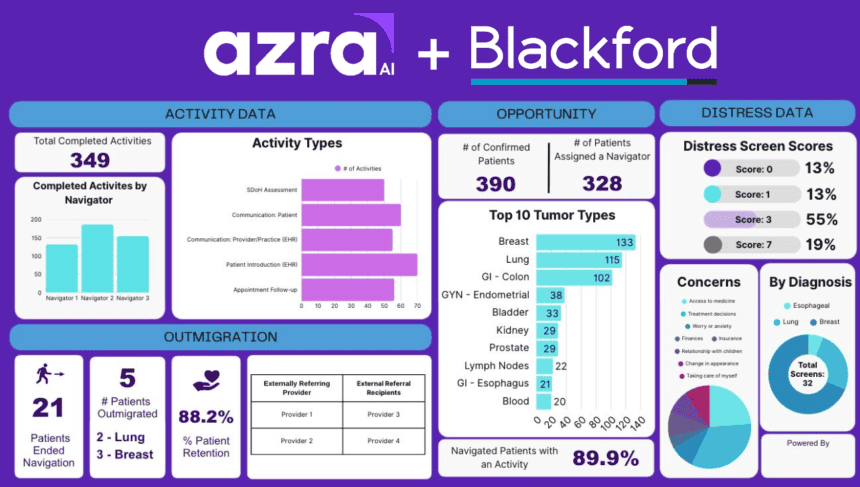
What are Azra AI’s plans for its new acquisition, AI platform company Blackford Analysis? Azra AI sees Blackford as a key piece in its effort to leverage artificial intelligence to ensure that patients with incidental findings or a cancer diagnosis don’t fall through healthcare’s cracks.
Azra AI announced on October 9 that it would be merging with Blackford after Azra’s primary investor, private equity firm Sopris Capital, acquired the Scotland-based platform AI company.
- The announcement capped a year of uncertainty for Blackford that began in September 2025, when parent company Bayer announced it was stepping away from the digital platform business.
In an interview with The Imaging Wire, Azra AI CEO John Marshall described the factors that attracted the company to Blackford…
- A large stable of about 135 AI algorithm companies on Blackford Platform.
- Strong relationships with OEM companies, for whom Blackford provides its AI orchestration platform on a white-label basis.
- Contracts with major U.S. health systems, including the Veterans Health Administration.
But who is Azra AI? The company offers solutions for one of the biggest challenges in healthcare – tracking patients with incidental findings or a diagnosis like cancer and managing their care.
- Azra AI emerged in 2022 after Sopris Capital funded the acquisition of healthcare assets from Digital Reasoning. The company got a major boost earlier this year when it acquired Thynk Health, which developed software for performing CT lung cancer screening and tracking incidental findings.
Marshall is a longtime imaging industry veteran (he attended his first RSNA at age 23) who took the helm at Azra AI in 2024, and since then revenues have grown 12X.
- Patients with incidental findings or a cancer diagnosis are often lost to follow-up care, but Azra AI’s software helps bring them into an organized system where they can be followed and tracked. Where implemented, it has boosted patient retention rates for various conditions from 43%-69% to 90%-96%.
One of the combination’s immediate advantages is synergy – patients flagged for a disease by a point-source algorithm on Blackford Platform can then be directed to Azra AI solutions for follow-up care.
- What’s more, Azra AI will now be able to sell its oncology tracking software to Blackford customers – both OEMs and healthcare providers.
Despite the turmoil of the past year, Marshall said Blackford’s team deserves praise for keeping the lights on and the servers humming.
- “The team that was there did a Herculean job,” he said.
The Takeaway
Azra AI’s takeover of Blackford raises exciting prospects for the radiology AI sector, uniting point-source AI available through Blackford with Azra AI’s patient tracking expertise. It’s a synergy that looks set to leverage the power of AI for better patient care.
|
|
Meet Merge at RSNA 2026
Join Merge at RSNA 2026 Booth #8113 to be among the first to see their innovative new approach to cloud-native enterprise imaging and AI-powered workflow orchestration in action – and how these offerings are tailormade to meet your evolving needs.
|
|
CAC Reimbursement for Routine Chest CT
The new Medicare code G0680 brings reimbursement for coronary artery calcium (CAC), enabling health systems to transform routine imaging into a proactive cardiovascular screening tool. Use Riverain’s customizable ROI calculator to demonstrate its potential financial impact on your operations.
|
|
The Radiology Layer Nobody Talks About
Detection algorithms, generative reporting tools, and worklist triage engines are only as good as the data that reaches them. Kailo Medical’s KailoHub is the connective tissue that sits between everything. Learn how it can benefit you on this page.
|
|
- Project Develops 7T PET/MRI: If you’re looking for a gift for the radiologist who has everything, how about a 7T PET/MRI scanner? In a new paper in JNM, researchers describe their Human Dynamic NeuroChemical Connectome scanner, which consists of a high-sensitivity NeuroSphere dedicated brain PET insert that can be integrated into a Siemens Healthineers Magnetom Terra.X 7T MRI scanner. The scanner’s technical specifications are impressive, and researchers hope it can be used for high-speed dynamic brain imaging, with PET temporal resolution comparable to functional MRI.
- Your Brain on Ultraprocessed Food: Ultraprocessed foods have become a hot topic, but a JAMA Network Open study showed they may have a not-so-obvious consequence: mini-strokes. Among 8.8k adults aged 35-64 years in Canada who underwent brain MRI, those who consumed the most ultraprocessed food had 40% higher odds of subclinical vascular brain injury. While cognitive performance didn’t appear to be affected, researchers emphasized that deterioration visible on MRI scans may precede obvious cognitive decline.
- FDA Clears Breast MRI Risk Tool: The FDA cleared an AI-based algorithm from SimBioSys designed to predict long-term risk of cancer recurrence by analyzing breast MRI exams and clinical data. Unlike risk prediction tools that analyze screening mammograms, the company’s TumorSight Risk is intended to be used after a woman has been diagnosed and before surgery to predict recurrence at five and 10 years. Clinicians can use the information to modify their surgical plans if necessary, with clinical efficacy demonstrated in a validation study with 2.1k patients.
- FDA Workshop on Transcranial Ultrasound: Transcranial ultrasound is garnering renewed attention as a tool with therapeutic applications such as neuromodulation and drug delivery across the blood-brain barrier. The FDA is working with the Focused Ultrasound Foundation to host a November 10 workshop on ways to accelerate R&D by developers of transcranial ultrasound devices, including discussion of the latest scientific knowledge, safety considerations and patient risks, and clinical trial design. The workshop will be held in person and will be webcast.
- Adapting Adult AI for Kids: AI adoption is growing in radiology, but available solutions often overlook a very important population: children. A new Nature Biomedical Engineering study highlights a process for retraining adult AI models for pediatric use. The process was used to train a model sequentially on 3k pediatric chest X-rays from different hospitals and outperformed models trained on single-hospital data at 29 of 30 sites. The new model also lowered breathing tube placement error to 0.67 cm, compared to 1.29 cm for hospital-specific models and 4.30 cm for adult-only models.
- JAMA AI Journal Debut in 2027: The new year will welcome another journal to the JAMA family: JAMA AI, headed by Roy Perlis, MD. As PubMed recorded >80k AI articles in 2025 and AI-related submissions to JAMA have more than doubled since 2023, a new platform for AI health research is in high demand. The journal will also coexist with the nearly three-year-old JAMA+ AI site. It’s likely that radiology will be a hot topic for the new publication, given that >75% of AI solutions approved by the FDA are for medical imaging.
- Sirona Raises $40M in Series D: Sirona Medical raised $40M in a Series D funding round that brings the company’s total paid-in capital to $150M. In announcing the round, Sirona noted that its year-over-year revenue has grown 2.5X, while it expects to bring on board over 1k radiologists to use its cloud-based software, including the RadOS platform, in the next year. The company said the new raise will fund the company “indefinitely,” as well as support the commercialization of its recently released Cortext AI orchestration layer.
- What’s the ROI of AI? A new analysis from Bain & Company confirmed the findings from Bessemer’s recent AI scorecard: ROI arrived faster and higher than expected. About 60% of payors said that AI returns have met or exceeded expectations, especially when it comes to handling calls. Providers have seen the most ROI in revenue cycle management, which remains their top investment priority for next year. Bain also points out that investors shouldn’t fear the “SaaSpocalypse,” and says incumbent moats will persist or even deepen with further AI embedment.
- OnePACS Inks RADPAIR Alliance: OnePACS is adding a generative AI-powered reporting capability to its PACS software through an alliance with RADPAIR. The integration unifies RADPAIR’s reporting technology with OnePACS’ connected imaging, worklist, reporting, and image distribution capabilities. The agreement gives OnePACS users new AI-based reporting functionality, while expanding RADPAIR’s stable of partners.
- Visage Highlights Rad/Path Integration: Visage Imaging highlighted new capabilities with its Visage 7 software that support viewing of both radiology and pathology images with the same viewer at last weekend’s Pathology Visions 2026 conference. The company showed the latest version of Visage 7.1.21, including new pathology features like automatic registration, cell counting, fluorescence, and z-stacking. Diagnostic use of Visage 7 | Digital Pathology is still a work-in-progress.
- BeSound Opens First ABUS Center: Imaging services startup BeSound opened its first center last week offering automated breast ultrasound (ABUS) scans to women with dense breast tissue in New York City. The company raised $7M last year to fund an operating concept built around offering scans with GE HealthCare’s Invenia ABUS scanner, which isn’t usually available outside of hospitals. BeSound also plans to begin operating a mobile route.
- Handheld Cardiac Implant Reader: BridgeSource Medical received FDA de novo clearance for its SmartRead handheld device that quickly identifies a patient’s pacemaker or defibrillator brand in the ER. Many ER patients don’t know or can’t communicate their device brand, which often leads to X-rays and care delays, but SmartRead identifies implants within 20 seconds by mimicking the communication pings of major manufacturers. SmartRead could also be used to identify MRI-conditional implants before MRI scans.
|
|
More than an Image. The Big Picture
AGFA HealthCare understands that striking the critical balance between clinical efficiency and quality delivery of patient care starts with the clinician experience. Learn how their Enterprise Imaging platform makes the complex simple.
|
|
United Imaging at RSNA 2026
At RSNA 2026, United Imaging will be featuring new technology in all modalities. You’ll be able to see the latest and greatest, review images, and meet leadership. Visit them at Booth #1932 to learn how their Passion for Change makes a difference.
|
|
AI Detects Pulmonary Hypertension from a Single Echo Clip
Pulmonary hypertension carries a diagnostic delay of years due to symptoms that can overlap with common heart and lung diseases. But AI from Us2.ai can detect the condition from a single echocardiography clip, substantially exceeding current clinical benchmarks.
|
|
- Built for Today’s Demanding ORs: The Persona C HR mobile C-arm from Fujifilm Healthcare Americas combines high-power performance, ultra-low-dose imaging, and surgeon-friendly control – all in a lightweight, spacious design. Discover its advantages today.
- The Business Case for Modernizing Medical Imaging: Explore the business case for modernizing medical imaging with Intelerad’s IntelePACS and InteleOrchestrator. Read the white paper to learn how healthcare organizations can improve operational efficiency, diagnostic quality, and cost management while delivering measurable business value.
- A New Resource for Radiology Jobs: Check out the new Job Boards from Medality to gain access to newly posted positions for radiologists, residents, and fellows. If you’re an employer, post your first job for no charge to reach Medality’s network of over 40,000 monthly users.
- Enterprise Access to Clinical Video: Altamont Software offers a centralized, enterprise approach toward capturing all medical video in the DICOM standard format and making it available to the EHR, providing operational, security, clinical, and financial benefits. Learn more on this page.
- Help Patients Get the Right Care Sooner: Rising demand, limited time, and disconnected systems can make it harder to get the right care to patients. Discover how the latest radiology solutions from Philips can help at RSNA 2026. Reserve time with our experts or stop by Booth #6730.
- AI-Enabled Data Migration: Laitek’s Migratek platform is a trusted solution for DICOM data migration that’s been significantly enhanced through Enlitic’s advanced ENDEX data standardization technology. Learn more about the future of data migration on this page.
- Accelerating Care Today for More Tomorrows: GE HealthCare empowers precision care with innovative imaging, patient management solutions, and tailored consulting services for every step of the theranostics pathway. Learn more about theranostics on this page from GE HealthCare.
- Technical Brilliance That’s a Generation Ahead: Read with the highest quality and precision at ultrafast speed using Visage Imaging’s friction-less, server-side architecture, enabling you to use Visage 7 on your favorite devices without compromise.
- Dictate Up to 90% Less: What if radiologists could say less without sacrificing what matters? Rad AI Reporting can reduce words dictated by up to 90%. Request a demo.
- Cloud Confusion Is a Contract Problem: Varying definitions of cloud and opaque SaaS pricing create real financial risk. In this paper, Dr. Eliot Siegel separates the legitimate drivers of cloud adoption from vendor noise, and sets out what providers should expect from their partners. Read the paper.
- Reporting Is Radiology’s Next Transformation: While AI’s role in diagnostic imaging is well-established, one part of the workflow has remained largely unchanged despite its central role: the report. Read this article from DeepHealth to learn more about radiology’s next transformation.
- A Better Worklist Optimizes Cases. SWO Optimizes the Practice: By simultaneously addressing multiple operational parameters and objectives, SWO transforms radiology operations – improving performance across throughput, turnaround time, workload equity, capacity, radiologist experience, and more.
- A Next-Generation Oncology Ecosystem: Quibim has launched their next-generation oncology ecosystem platform. Find out how QP-Prostate provides a comprehensive, end-to-end management workflow for prostate cancer care, supporting clinicians from the earliest stages of image acquisition through diagnosis, patient management, and follow-up.
- Radiology Automation Simplified: CARPL is an enterprise-grade radiology AI validation and deployment platform with 250+ AI applications across 85+ AI vendors that empowers healthcare providers to access, assess, and securely integrate imaging AI in their practice. Book a demo today.
- A New Solution for Radiology Reporting: Sectra Reporting delivers a fully built-in, AI-enhanced reporting experience that seamlessly connects PACS imaging data and measurements through intuitive templates. Discover how it can meet your needs today.
- End-to-End Imaging Interoperability: Basic image exchange is increasingly table stakes. The harder work happens around it: finding relevant priors, bringing in outside imaging, reconciling patient identity, and much more. In this live demo, see how Medicom manages those workflows end-to-end through one interoperability platform.
- Check out Mosaic Reporting at RSNA: Mosaic Reporting is available to radiology practices, hospitals and health systems. It runs alongside an organization’s existing PACS, so the image archive and viewer stay in place. Mosaic Reporting can be seen live at RSNA 2026: Booth #5304 in the South Hall AI Showcase or through a private demo scheduled here.
- Top Health Systems Are Providing Patient-Friendly Reports: Scanslated is the digital patient experience platform trusted at scale by Duke Health, Lumexa Imaging, and other patient-centric healthcare providers. Find out how Scanslated can work for you today.
|
|
|
|
|


