|
Risks of Rising Contrast Use, More RSNA News, and Density Confusion
December 8, 2025
|
|
|

|
|
Together with
|

|
|
|
“The purpose of a radiologist is to diagnose disease, not to study the image. The image studying is simply a task in service of diagnosing the disease.”
|
|
NVIDIA CEO Jensen Huang, on why AI won’t take radiologists’ jobs.
|
|
|
|
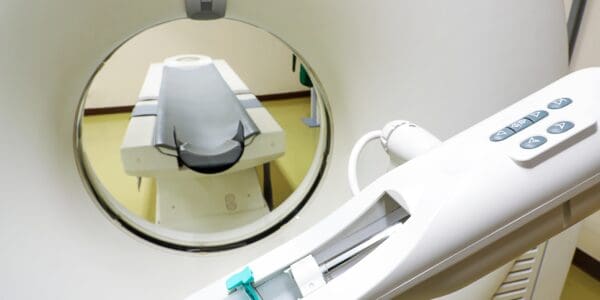
The use of contrast media in medical imaging procedures has been rising steadily in recent years, a trend that creates environmental risks. So says a new study in JAMA Network Open that documents growth in contrast use over the past 13 years.
Contrast is an essential part of many imaging exams, helping radiologists better visualize pathology that might be harder to see on unenhanced scans.
- But contrast use also comes with a wide array of risks, from patient reactions that on rare occasions can be fatal to environmental buildup of contrast that’s excreted from patients after exams and makes its way into local waterways – including drinking water.
This latter phenomenon is what’s explored in the new paper, authored by researchers from the ACR’s Harvey L. Neiman Health Policy Institute.
- They analyzed Medicare claims from 2011 to 2024 for 169M contrast-enhanced imaging exams that involved the use of 13.5B milliliters of contrast for both CT and MRI studies.
HPI’s analysis found…
- Iodinated CT contrast use grew 5.2% and gadolinium MRI was up 3.5% from 2014 to 2019.
- Contrast use fell 9.6% for CT and 15.6% for MRI during the COVID-19 pandemic in 2020, but then rebounded afterward.
- A small number of exams accounted for most of the CT contrast usage, such as CT abdomen and pelvis (4.4B mL) and CT chest (2.7B mL).
- MRI numbers were far lower, such as for brain MRI scans (221M mL) and abdominal MRI studies (70M).
So what can radiology do? Simply reducing contrast use for environmental reasons isn’t much of a solution, as it has implications not only for patient care but also for medical malpractice risk.
- But ongoing efforts to reduce inappropriate imaging would have a follow-on effect of also lowering contrast use, as would protocols to reduce contrast use for patient safety reasons (the introduction of high-relaxivity gadolinium-based agents that cut MRI contrast dose by 50% is a great example).
The authors also cite the development of AI-based techniques that could create contrast-like exams from existing non-contrast data, offering AI developers another possible segment to target.
The Takeaway
The new study offers an interesting twist in the debate over contrast reduction, pointing out that efforts to reduce unnecessary contrast use promise to benefit not only patients but also the planet.
|
|
Purchasing a Cloud-Hosted Enterprise Imaging Solution
The decision to move your enterprise imaging to the cloud is significant. But how do you choose the right solution? Discover the 10 critical questions to ask in this guide from AGFA HealthCare.
|
|
Cutting-Edge PET/CT to Support Theranostics
Theranostics is an exciting new field that combines diagnostics and therapy. Discover how Florida Theranostics is using United Imaging’s cutting-edge uMI Panorama PET/CT scanner to establish a high-quality level of patient care.
|
|
Optimize Radiology Workflows
Harness cloud and AI technology to help your radiology teams unlock insights, increase efficiencies, and improve patient care. Learn more about an integrated approach to AI in radiology in this e-book from Microsoft.
|
|
- Ultrasound AI for Breast Screening: In a Thursday session at RSNA 2025, researchers presented work in ultrasound AI-aided breast screening (R6-SSBR11). In a study with 93.2k screenings, researchers used whole-breast ultrasound with DBT, finding an additional 1.1 cancers per 1k women. Meanwhile, the Koios DS Breast AI algorithm reduced benign biopsies by 68%, and using AI to triage automated breast ultrasound with digital mammography reduced abnormal interpretation rates while improving specificity to 93%. Finally, researchers found radiologists using AI during image interpretation had higher sensitivity, but applying it afterward produced higher specificity.
- Cardiac CT’s Predictive Value: The power of cardiac CT for predicting cardiovascular events was the subject of another Thursday afternoon session (R6-SSCA11). In a study of 2.6k patients not on lipid-lowering drugs, cardiac CT scans showed that high calcium plaque volume better predicted MACE than plaque density. Another group presented a technique for generating virtual CCTA images from non-contrast CT scans for quantitative stenosis evaluation, while a “super-resolution” CT-FFR protocol better detected stenoses than normal-resolution images. Finally, CCTA was a noninvasive alternative to angiography for monitoring people with spontaneous coronary artery dissection.
- Rad AI Updates Speech Model: Rad AI unveiled a new generation of its speech recognition technology at RSNA 2025 that the company says improves the speed and accuracy of radiology reporting. Rather than rely on a single application for speech recognition, the new technology applies multiple speech engines and uses a “voting” algorithm to determine the most accurate understanding. The new technology will be integrated into the company’s Rad AI Reporting product.
- Bayer Highlights Gadoquatrane Progress: Bayer is highlighting clinical results presented at RSNA 2025 from the QUANTI Pediatric study of gadoquatrane, its high-relaxivity MRI contrast agent in development. The results showed that gadoquatrane’s pharmacokinetics, safety, and efficacy in children were similar to that achieved in the adult arm of the QUANTI study, which tested gadoquatrane at a 60% dose reduction compared to standard gadolinium-based contrast agents. Bayer submitted gadoquatrane for FDA approval for adult and pediatric applications in June.
- Microsoft Extends Dragon Copilot to Radiology: Microsoft has developed a version of its Microsoft Dragon Copilot clinical assistant for radiologists, and highlighted the solution at RSNA 2025. The new version is in preview development and serves as a companion to the company’s PowerScribe One radiology reporting solution, providing generative, multimodal, and agentic AI functions. The cloud-native application is designed to streamline radiology report generation without interrupting radiologists’ interpretations, performing functions like checking report accuracy and quality to prevent downstream claim denials.
- Lunit’s RSNA 2025 News: Lunit touted a wide range of studies presented at RSNA 2025 using its AI solutions for analyzing breast images. Leading the research were findings from Sweden’s ScreenTrustCAD trial of 193k screening mammograms in which single radiologists using Insight MMG detected more invasive cancers with fewer recalls than human-only double reading. An MGH study with 1k retrospective mammography exams showed Insight DBT localized 84% of true-positive cancers, while two other studies showed how AI-powered volumetric breast density calculations improved risk prediction.
- SimonMed to Deploy Lunit: In other Lunit news, outpatient imaging provider SimonMed Imaging will deploy the company’s AI foundation models for chest X-ray report generation in an agreement announced at RSNA 2025. SimonMed will use Lunit’s Foundation Model Services platform to fine-tune Lunit chest X-ray algorithms using SimonMed’s own images and reports to create a tailored model that reflects its clinical operations across its over 175 locations. The alliance represents an intriguing new model for cooperation between AI developers and imaging providers.
- DeepHealth Launches Breast Suite: At RSNA 2025, DeepHealth launched Breast Suite, a modular package of AI-powered applications for breast imaging. Breast Suite was built on the AI foundation DeepHealth acquired from its purchase of iCAD, and includes tools for breast cancer detection, breast density assessment, and cancer risk assessment, while tools for assessing breast arterial calcification are in development. Breast Suite also includes functionality for cloud-based multimodality image viewing, prioritized worklist, and intelligent reporting.
- 4DMedical’s Philips Partnership: 4DMedical expanded its distribution agreement with Philips by adding North American sales of its CT:VQ solution to the alliance. CT:VQ provides a CT-based alternative to nuclear medicine ventilation/perfusion scans to assess lung function, and the solution secured FDA clearance in August. Philips will add CT:VQ to its product portfolio in the U.S. and Canada, and will allocate dedicated sales and clinical specialists to the product. The companies will also collaborate in marketing and co-branding campaigns.
- Agfa’s RSNA 2025 News: Agfa HealthCare rolled into RSNA 2025 reporting momentum from new enterprise imaging agreements in the U.S. and Canada. University of Illinois Health in Chicago chose Agfa’s Enterprise Imaging Cloud platform to unify image management across radiology, cardiology, and point-of-care environments, while EFW Radiology in Calgary, Alberta also selected Enterprise Imaging Cloud. The company said it is seeing growing interest in cloud-based SaaS deployments. In other Agfa news, its Agfa Radiology Solutions digital X-ray business unveiled Musica Xpert, the latest generation of its Musica image processing software.
- Ikonopedia Adds CEM to Reporting: Ikonopedia added support for contrast-enhanced mammography to its reporting platform, showing the feature at RSNA 2025. CEM is gaining interest as an alternative to breast MRI for working up suspicious lesions found on screening mammography, and the new feature allows Ikonopedia users to track CEM cases and analytics such as increased flow of contrast associated with tumors. Ikonopedia notes that CEM works on standard mammography machines, which are typically more accessible than breast MRI.
- ScreenPoint Joins Microsoft AI Network: ScreenPoint Medical’s Transpara AI algorithm for mammography will be added to Microsoft for Healthcare’s Precision Imaging Network under a new agreement between the companies. The relationship will give PIN users access to additional tools for breast cancer analysis within their existing IT systems. ScreenPoint also highlighted a number of RSNA 2025 presentations based on its technology, including Transpara Risk for five-year breast cancer risk prediction (still investigational), and Transpara Breast AI.
- Quibim AI Added to Aidoc Platform: Aidoc added Quibim’s QP-Prostate AI solution for analyzing prostate MRI scans to its Aidoc aiOS platform. QP-Prostate evaluates images for compliance with PI-RADS v2.1, assesses image quality, segments the prostate gland, and highlights suspicious regions. In other Aidoc news, the company is working with NVIDIA to make AI algorithms developed with its MONAI framework available on aiOS through a dedicated API.
- Harrison Signs Apollo Radiology: Harrison.ai is providing its chest X-ray and brain CT AI algorithms to teleradiology provider Apollo Radiology International. Apollo serves 200 healthcare organizations in 32 countries, with reporting hubs in India, the U.K., U.S., and UAE where radiologists read over 2M scans annually.
- Gradient Updates Atlas Software: Gradient Health debuted an updated version of its Atlas data platform at RSNA 2025. Designed to be used by AI developers to access deidentified data for algorithm training, Atlas 2 includes a redesigned and faster developer interface, deeper search capabilities with more metadata, and improved collaboration tools with shared cohorts, common workspaces, and better dataset analytics. Atlas provides access to 20M medical imaging studies, with Gradient working on adding another 30M.
- Mindray Launches Flagship Ultrasound: Mindray introduced a new ultra-premium ultrasound scanner, Resona A20, at RSNA 2025 that will be the flagship system in the company’s ultrasound fleet. The FDA-cleared Resona A20 is built on Mindray’s Acoustic Intelligence Technology and includes features such as automation, smoother workflow, and configurable tools, while advanced clinical techniques include shearwave elastography for liver imaging and support for contrast-enhanced ultrasound. Mindray also demonstrated its recently launched TE Air e5M handheld point-of-care scanner.
- Ziosoft Launches Plaque Analysis: Advanced visualization software developer Ziosoft debuted an AI-based feature for automated coronary plaque analysis of CT scans at RSNA 2025. Developed as a tool for the company’s flagship Revoras software, the 510(k)-pending solution supports on-site plaque evaluation rather than requiring studies to be sent off-site for processing as is the case with other plaque solutions. This results in lower operating costs and faster turnaround times. Ziosoft also launched Revoras Surgical Imaging Suite, which supports planning for liver, renal, and pancreatic surgeries.
- Lumexa Prices Upcoming IPO: Outpatient imaging center operator Lumexa Imaging provided details on its upcoming IPO, which when completed would value the company at up to $1.89B. Lumexa plans to issue 25M shares at a price between $17-$20, raising up to $500M. Formerly known as U.S. Radiology Specialists, Lumexa is the second largest imaging center operator in the U.S. after RadNet, with 184 centers in 13 states.
- Breast Density Notes Fall Short: Notifying women about their breast density status appears to be causing confusion – at least in Australia. A study in The BMJ reviewed Australia’s rollout of a density notification program, finding that among 2.4k women, those notified they had dense breasts were up to 30% more likely to be anxious and up to 92% more likely to be confused. Women did not feel more informed and most wanted their general practitioners to guide them – but previous research shows GPs need more knowledge of density.
|
|
Innovation for the Imaging Workflow You Deserve
Radiologists are overwhelmed by complex systems and growing caseloads. Discover how innovative workflow orchestration from Merge integrates various PACS, RIS, and EMR systems into a single AI-driven workspace.
|
|
- AI Echo Detection of Cardiac Amyloidosis: AI echo software from Us2.ai identified cardiac amyloidosis using just a single apical four-chamber view in a global multi-ethnic population in research presented at ASE 2025. Learn how it can improve your practice on this page.
- Save 60+ Minutes a Day: Rad AI Impressions automatically generates report impressions from dictated findings with impression language that’s individually customized to each radiologist and practice. Join one-third of U.S. health systems using Rad AI to improve efficiency for radiologists.
- A New Direction at Mach7: Enterprise imaging company Mach7 Technologies has embarked on a new direction with recently appointed CEO Teri Thomas at the helm. Learn about the new focus in this Imaging Wire Show.
- Interpretation Efficiency in Radiology – A Critical Strategy: Healthcare institutions are at a critical stage, where an emphasis on interpretation efficiency needs to be a priority. Check out this white paper from Visage Imaging and Signify Research on strategies to optimize your interpretation efficiency.
- How AI Is Redefining Data Migration: Enlitic’s Migratek data migration services – combined with AI-enabled ENDEX data standardization – is changing the game for data migration projects. Discover how it can benefit you in this article.
- AI Tools for Lung Cancer Screening: CT lung cancer screening is gaining momentum around the world. Learn about AI-based nodule detection tools that can improve the accuracy of low-dose CT scans in this video from Riverain Technologies.
- The Future of Radiology: In this episode of The Radiology Report, Medality’s Daniel Arnold sits down with Marc Gosselin, MD, from Vision Radiology for a thought-provoking conversation on burnout, balance, and the future of radiology.
- It’s Time to Make AI Adoption Simple: Gleamer unifies a fragmented AI landscape into a single, simple, powerful platform. Discover an AI ecosystem where everything is designed to be intuitive, consistent, and scalable, making AI adoption simpler than ever.
- Innovative Mobile Radiography Solutions: The University of Vermont Medical Center prioritizes patients when it comes to advanced diagnostic imaging tools. Read how they rely on Philips for innovative mobile radiography solutions, prompt response times, and a community focus to deliver superior patient care.
- Could AI Help People Live Longer? The most powerful transformation in healthcare may come not after illness appears, but through what we do before disease ever takes hold. Read this article from DeepHealth on how AI can fundamentally change the way we approach health.
- Transform Your Workflow with Intelligent Imaging: Radiology departments face growing challenges: higher workloads, fewer staff, and tighter budgets. Discover how intelligent imaging technology from Siemens Healthineers streamlines processes, reduces stress, and improves outcomes. Access the white paper now and transform your workflow.
- Bring Your Radiology AI into Your Clinical Workflows: CARPL enables healthcare providers and researchers to develop, test, and deploy their own AI models within existing clinical infrastructure. From seamless data ingestion and de-identification to model training, packaging, and live deployment, CARPL provides an end-to-end environment tailored for radiology.
- New-Generation Platform for Managing Multi-Omics Data: QP-Insights from Quibim is a new-generation advanced platform for the management, storage, and analysis of large-scale multi-omics data and medical images for clinical studies and research projects. Learn more on this page.
- A Bold Transformation in Client Experience: Intelerad is transforming how it supports customers and partners with clients through a company-wide Client Obsession initiative. The company is making investments in new tools, technologies, and staff to remove friction and deliver value – find out how it works on this page.
|
|
|
|
|


